
The June Garden: A Season of Steady Care
Updated: Sep 27
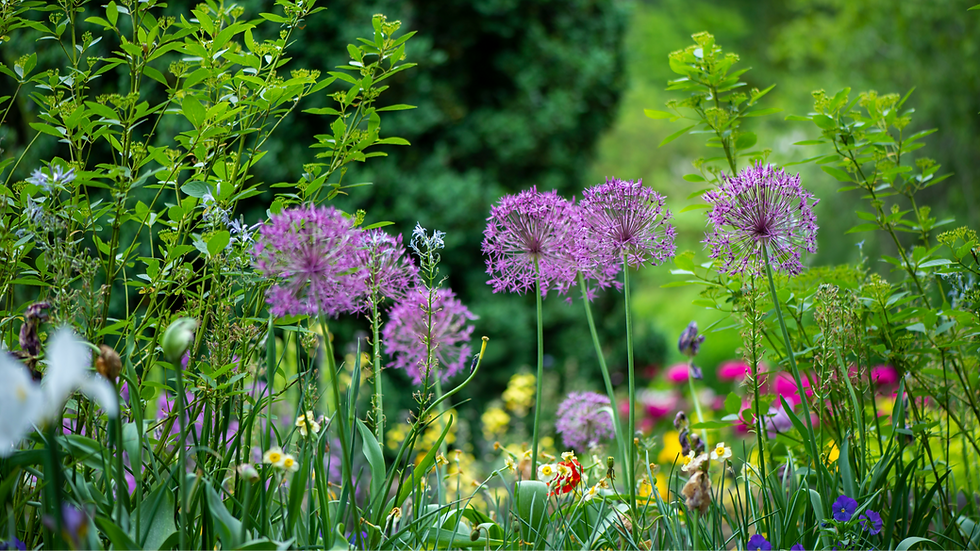
June arrives carrying warmth in both hands. The garden becomes fuller overnight, herbs spill over their edges, and the first true harvests begin to find their way into the kitchen.
As the humidity rises, I move into my role as a steward of the space. My task isn't to control the garden, but to ensure it has enough room to breathe. I spend these quiet moments checking for airflow among the perennials, tidying up the base of the stems, and observing how the plants handle the transition from the coolness of spring to the heat of summer. It is less about perfection and more about presence—ensuring our garden friends have the space they need to thrive in the heat to come.
Stewardship also includes watering deeply instead of hurriedly, deadheading spent blooms so new ones can form, supporting climbing stems before summer storms arrive and watching closely enough to notice what needs more space, or more shade.
For those who enjoy a more detailed garden checklist, last year's June guide offers additional ideas for sowing, tending, and enjoying the season.
The Harvest Begins
While spring was a season of gathering blossoms and clipping small bouquets, June begins to offer something different: ingredients.
The rhubarb is ready now—tart, bright, and abundant. This month, I’m bringing the harvest into the kitchen with a Rhubarb Glazed Roasted Chicken. The glaze carries that beautiful balance of sharpness and sweetness that feels distinctly early summer, especially served alongside herbs freshly clipped from the garden.
There is something deeply comforting about cooking from what the season offers naturally.

A bright, tangy, and sophisticated finish for roast chicken or roasted root vegetables.
Ingredients:
2 cups chopped rhubarb
1/4 cup honey (or maple syrup)
1 tablespoon apple cider vinegar
A pinch of sea salt
Optional: A sprig of fresh thyme or a small knob of grated ginger for depth.
Instructions:
Simmer: Combine all ingredients in a small saucepan over medium-low heat.
Break Down: Cook for 8–10 minutes, stirring occasionally, until the rhubarb has completely broken down and the mixture has thickened into a rustic, jam-like consistency.
Strain (Optional): If you prefer a refined, glossy glaze, push the mixture through a fine-mesh sieve. If you prefer a "farmhouse" texture, leave it as is.
Finish: Brush the glaze over your chicken during the last 15 minutes of roasting, or drizzle it over a tray of roasted carrots or parsnips just before serving.
Store your glaze in a glass jar in the fridge for up to a week; it also pairs beautifully with grilled halloumi or roasted vegetables if you find yourself with an abundance of rhubarb.
June is also a lovely month to work alongside the moon - another quiet reminder that the garden moves in rhythms far older than our calendars.
Moon Phases & Garden Paths: June Notes
Following the rhythm of the moon during this season offers a gentle way to stay connected to the natural pace of things instead of getting swept up in the urgency of summer abundance. Whether you follow it closely or simply use it as a quiet point of reference, the lunar cycle can bring a sense of steadiness to your gardening rhythm. Below is a simple guide for planting, weeding, and harvesting in step with the changing moon phases.
🌘 Waning Moon – Full Moon to Last Quarter – June 1 - 7
As the moon begins to shrink, the garden’s energy is believed to settle downward toward the roots. This phase favours maintenance, balance, and clearing away what no longer serves the garden.
Best for:
Weeding
Pruning and deadheading
Dividing perennials
Root care and soil tending
🌑 Waning Crescent – Last Quarter to New Moon – June 8 - 13
The waning crescent invites slower work and restoration. Rather than pushing for growth, this is a time to tidy, compost, and let the garden breathe before the next cycle begins.
Best for:
Deep weeding
Clearing spent growth
Compost turning
Cleaning tools and garden spaces
Quiet observation and rest
🌑 New Moon - June 14
The new moon is often seen as a time for pause, planning, and preparing the soil rather than active harvesting. Use this time to walk the garden slowly, notice what is emerging, and consider what needs support in the weeks ahead.
Best for:
Resting and observing
Preparing beds and soil
Gentle watering and tending
Planning future sowings
🌒 Waxing Crescent – New Moon to First Quarter – June 15 - 20
As the moon begins to grow brighter, energy is believed to rise upward through the plants. This is a lovely time for sowing and planting anything that grows above the soil line and benefits from strong leafy growth.
Best for:
Planting herbs and leafy greens
Sowing flowers
Transplanting young seedlings
Encouraging fresh growth
🌓 Waxing Moon – First Quarter to Full Moon – June 21 - 28
The waxing moon carries strong growing energy. Focus on nourishing the garden during this phase—watering deeply, feeding plants, and supporting climbing stems as they stretch toward summer.
Best for:
Planting above-ground crops
Fertilizing and watering
Training vines and climbing flowers
Encouraging abundance and flowering
🌕 Full Strawberry Moon - June 29
Traditionally, the full moon is associated with abundance, moisture, and vitality. Harvests gathered now are often said to be especially flavourful and vibrant. Spend time enjoying the garden during this phase, not just working within it.
Best for:
Harvesting herbs, vegetables, and flowers
Gathering ingredients for seasonal meals
Cutting bouquets
Seed collecting and celebrating the season
The moon does not rush the garden, and neither must we. Each phase offers its own kind of work — and its own kind of beauty. The Summer Companion also includes a Strawberry Moon guide designed around the rhythms of productivity and rest throughout the month.
Until next time,



Comments