
How to Recreate Monet's Giverny Garden in Any Space
Updated: 6 days ago
Unlike the formal gardens of his era, Monet's garden was designed to be experienced as a living painting. Flowers were planted in sweeping drifts rather than orderly rows, colours blended into one another, and paths invited slow wandering. A Monet-inspired garden is not about perfection. It is about abundance, movement, and the changing play of light throughout the day and the seasons.
Monet painted flowers for many years — golden sunflowers, the tender blush of peonies, and the wild joy of poppies in wind. And at the heart of his garden, was his iconic water lily pond, where light danced across the water, changing from moment to moment, season to season.
How to Create a Monet-Inspired Garden in Any Space
Monet carefully grouped plants by colour families, allowing hues to blend and bleed into one another like colours on a painter's palette. To make these hues blend beautifully, you will need to choose a colour palette first. I have a playlist with various colour palettes for you to watch on the Everlea Journal's Youtube channel for inspiration.
When grouping your plants, think in colour drifts, not rows: plant 5-10 of the same flower in clusters, allowing them to “spill” into the next colour.
Impressionism is about capturing fleeting moments of light and colour, so don't forget to include plants that move in the breeze, such as ornamental grasses, poppies and cosmos.
In Monet's garden, there is structure beneath the whimsy. Don't forget to include a place to pause, and to incorporate water where possible. A bench, a chair, or a bistro set can become part of your artistic vision - a place to rest and enjoy your garden. While a Monet garden isn't complete without his iconic pond, you don't need a massive footprint to create it. If you don't want the maintenance of a full pond, a simple water fountain or a container water feature is just as pleasing.
Now, let’s wander through his garden of canvas and colour so that you can select the perfect plants for your own living painting.
Sunflowers
Tall sentinels of summer, bursting with sunshine. In Monet’s hands, they radiated energy - a golden chorus rising to the sky, each bloom turning faithfully toward the sunlight. Their cheerful faces bring warmth and abundance, standing tall above the surrounding flowers like rays of captured light.

In your garden, let them sway proudly in the breeze. Plant them near your vegetable garden or, because of their height, at the very back of your garden. Just make sure to choose a spot that gets plenty of full sun.
Chrysanthemums
Chrysanthemums are Autumn’s gift. In vibrant mauves, golds, and rusted reds, they bring structure and richness to the fading garden. Monet adored their sculptural beauty.
As summer softens into autumn, they offer colour when much of the garden begins to rest, reminding us that beauty lingers long after the first chill arrives.

In your garden, plant them for late-season beauty that lingers like a whispered farewell.
Anemones
Poppy anemones are delicate yet vivid, their jewel-toned petals glowing in red, blue, purple, pink, and white around dark centres. These spring-blooming flowers flutter in quiet elegance. Like brushstrokes caught by the wind, they bring movement and softness to the garden landscape.

In your garden, plant them in full sun where their silken petals can dance in the spring breeze and catch the changing light.
Poppies
In Monet’s world, poppies burst like laughter in fields of scarlet - untamed, joyful, and full of life. Their papery petals flutter on their slender stems at the slightest breeze, bringing movement and spontaneity wherever they bloom. Few flowers capture the spirit of Impressionism quite so perfectly, with their delicate petals catching the light like crumpled silk.

In your garden, scatter them freely where sunlight spills. These self-sowing annuals drift and wander, filling any gaps with effortless beauty.
Nasturtiums
Trailing embers of orange and red, nasturtiums drape and tumble with easy elegance at Giverny. Their round leaves and jewel-toned blooms spill across pathways, walls, and containers with a carefree charm.

In your garden, let them spill from pots, climb low trellises, or edge walkways with cheer. Edible, cheerful, and endlessly generous, they lend the garden a sense of abundance - as though nature herself has taken up painting.
Peonies
Like clouds touched by blush, Monet captured their lush abundance, their fleeting beauty wrapped in layers and layers of softness.

In your garden, plant them where you pass by often, so you can admire their charm and fragrance up close. Their blooms are brief but unforgettable - just the kind of fleeting beauty that defines cottagecore’s appreciation for the present moment.
Apple Trees
In spring, they are lush with blossoms. Monet painted them as symbols of life’s quiet rhythm,
their branches shaped the garden like poetry.

In your garden, even a dwarf apple tree brings delight, vertical interest, and structure to a small green space.
Purple Irises
Upright and regal, full beds of purple irises stood in Monet’s garden, swaying gently in the breeze.

In your garden, they’re incredibly reliable and drought-tolerant, making them an easy choice for a low-maintenance, dreamy garden.
Tulips
Spring’s first fanfare in bold uniforms of colour. Monet loved to paint them in pots and vases.
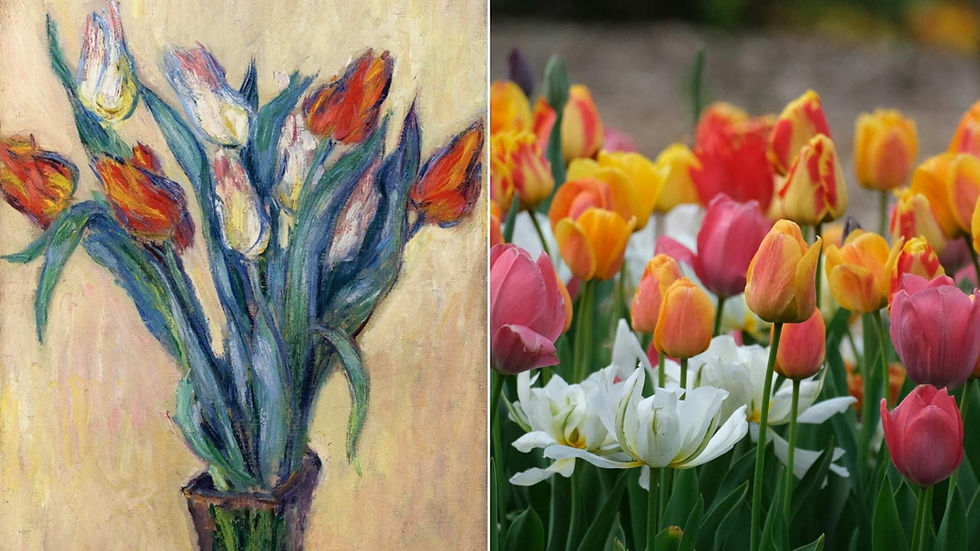
In your garden, plant waves of bulbs in large drifts of single colours for a dramatic, painterly spring surprise.
Daffodils
Daffodils announce the beginning of the gardening year. They're a bright lantern of spring and their familiar faces feel like old friends appearing right on time, every spring.

In your garden, naturalize them under trees or along borders for years of cheerful, golden spring greetings.
The Rose Arches
Overhead, arches blush with climbing roses, creating soft canopies of scent and shade. These were not just structures - they were gentle enclosures, like whispered secrets between the flowers and the sky.

In your garden, build arches or arbours and train climbing roses over them to turn shade into splendour.
Gladiolus
Vibrant subjects in Monet's paintings, Gladiolus is loved in the cottage garden for its tall spikes of colour. They are bold yet nostalgic, and always full of summer promise.

In your garden, plant them in tight clumps for structure, or tuck them behind low-growing flowers to create a beautifully layered scene.
Hollyhocks
Whimsical towers that sway above the others, reaching toward the sky, catching light and movement. Their beauty charmed Monet, just as much as it charms bees and passersby today.

In your garden, tuck them into the back of perennial beds or along fences as they can sometimes reach 6 or 7 feet.
Yellow Irises
Golden flickers planted in drifts - like sunshine caught in the reeds.

In your garden, nestle them in sunny borders or near a water feature or in damp soil where their bright faces can glow.
Lilac Bushes
Perfumed nostalgia. A perfect place to sit beneath, enveloped in dappled light and sweet fragrance.

In your garden, give them plenty of space and sunlight to bloom fully, and prune them immediately after flowering to ensure more fragrance next year.
White Clematis
Starry cascades, clinging to arches and trellises. They add softness to structure, and their pale blooms seem to glow in the soft light of dusk.

In your garden, let them scale a fence, a pergola, or even an established tree, weaving elegance into your vertical spaces.
Water Lilies
Water lilies float like poems upon the water's surface, quietly resting between water and sky.
Throughout the day, shifting light transforms their colours and reflections, creating the ever-changing scenes that inspired Monet again and again.

In your garden, plant them in a pond or large container. To keep them from taking over your pond, keep them in a hanging basket in the water.
Let Monet's garden remind us that beauty lives in the bloom, but also in the light between, and that art can grow from soil and sunlight. Monet created his garden to be the subject of his paintings, yet his gardening vision aligns with the cottage garden aesthetic. Flowers planted in drifts instead of orderly rows, classic cottage flower choices, and a place to slow down and quietly observe.
A Monet-inspired garden is about abundance, movement, and creating moments of wonder—a rose catching the morning light, poppies dancing in the breeze, or water reflecting the ever-changing sky.
Whether you have a sprawling garden, a small backyard, or a handful of pots on a patio, you can borrow from Monet's painterly approach. Plant what delights you, allow colours to mingle, and make space to pause. In doing so, you may discover, as Monet did, that tending a garden is another way of making art.
Until next time,



Comments